

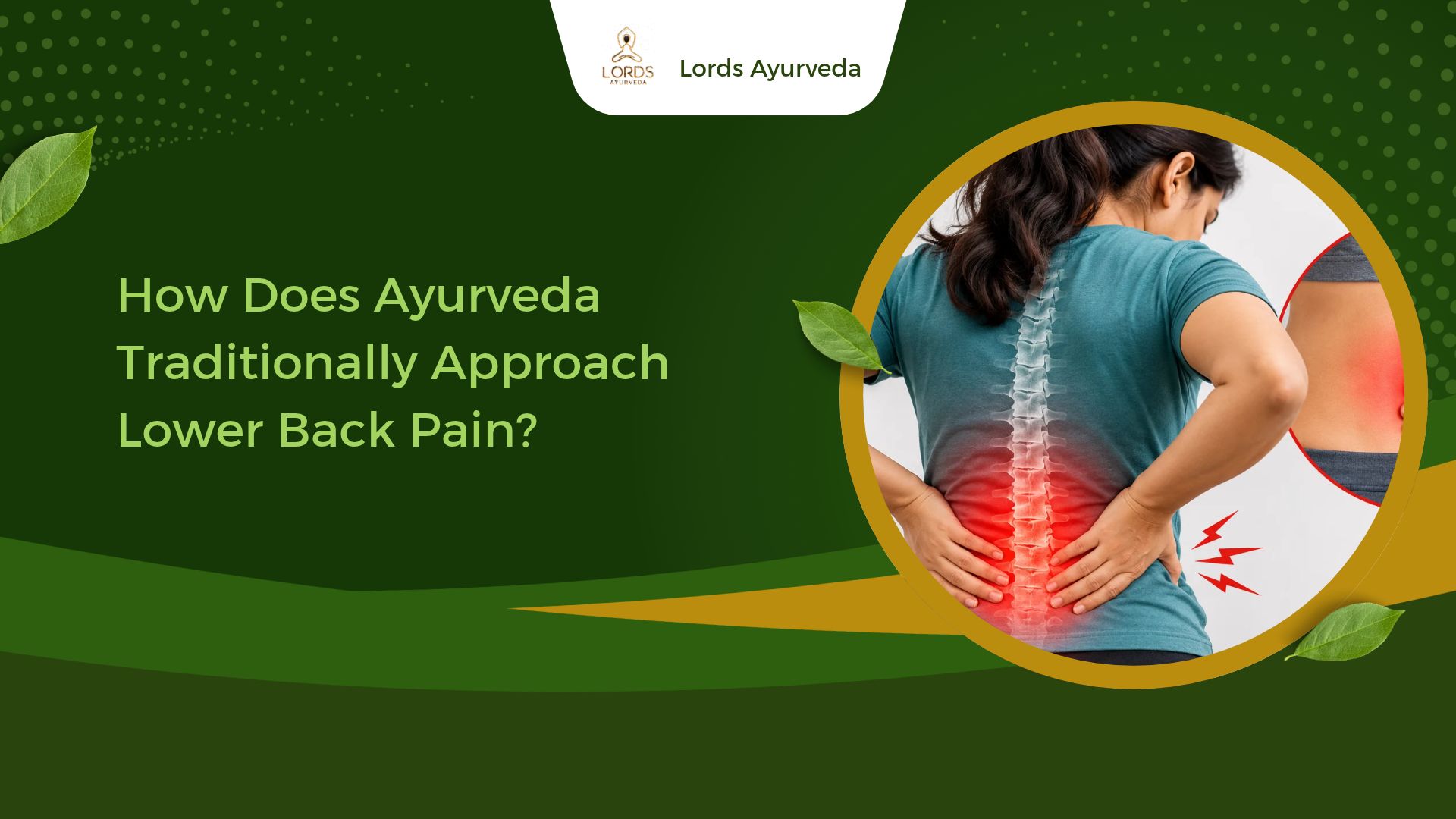
Approach Lower Back Pain – A person’s relationship with everyday movement can change when lower back discomfort becomes part of their routine. Sitting through a working day, travelling, bending to pick something up, or completing household activities may become difficult. Although the reasons vary from person to person, understanding the condition and choosing appropriate care are important steps towards better physical well-being.
Ayurveda offers a traditional perspective that considers the body, lifestyle, individual constitution, and daily habits together. Its approach to lower back discomfort involves several practices, selected according to individual requirements rather than following an identical treatment plan for everyone.
The Ayurvedic Perspective on Back Discomfort
Lower Back Pain – Ayurvedic principles associate movement-related discomfort with Vata Dosha. Classical descriptions of conditions such as Katishoola and Katigraha refer to pain and stiffness affecting the lower back.
An Ayurvedic assessment may consider physical activity, sleeping patterns, digestion, daily routines, and the nature of the discomfort. These observations help a qualified practitioner understand the individual’s condition and determine whether traditional therapies are appropriate.
1. Understanding the Role of Abhyanga
Abhyanga is an external Ayurvedic practice in which selected oils are applied to the body using traditional massage techniques.
For lower back discomfort, the practitioner may consider specific oil applications based on the individual’s physical condition. The choice of preparation and method depends on traditional therapeutic principles and professional assessment.
The practice is traditionally associated with relaxation and maintaining tissue comfort. It is not appropriate for every cause of back pain, particularly when an underlying injury or spinal condition requires medical attention.
2. Why Kati Basti Is Included in Traditional Ayurvedic Care
Kati Basti is a distinctive procedure used in traditional Ayurvedic practice for the lower back region.
Unlike an ordinary massage, this procedure involves creating a small enclosed area over the lower back using herbal dough. Warm medicated oil is carefully retained within this boundary for a prescribed period.
The procedure requires attention to oil temperature, duration, and individual suitability. A trained Ayurvedic professional determines whether it should form part of an individual’s care plan.
3. Herbal Knowledge and Personalised Preparations
Ayurvedic herbal knowledge includes different plant-based preparations traditionally selected according to individual health requirements. The choice is not based on the location of discomfort alone.
Practitioners may consider the person’s constitution, symptoms, digestion, existing health conditions, and medicines before recommending a formulation.
“Good healthcare begins with informed decisions, thoughtful assessment, and respect for individual needs.”
Herbal preparations are not automatically safe because they are natural. Some may interact with medicines or produce unwanted effects. They should only be used with appropriate professional guidance.
4. Movement, Yoga and Physical Comfort
Movement habits influence how the back responds to everyday activities. Remaining in one position for extended periods may contribute to physical discomfort, while appropriate activity can help maintain mobility.
Depending on the person’s condition, gentle walking, modified yoga movements, and suitable stretching may be incorporated into a routine.
The aim is not to force flexibility or perform difficult postures. Activities should remain comfortable and should be adjusted according to professional advice.
5. Everyday Habits That Deserve Attention
Traditional Ayurvedic thinking places importance on the relationship between daily habits and general well-being. Food, rest, activity, and routine are considered together rather than treated as separate concerns.
Practical habits worth considering include:
- Changing position regularly during long working hours.
- Using a comfortable chair with suitable back support.
- Avoiding sudden movements when lifting heavy objects.
- Maintaining a consistent sleep schedule.
- Including comfortable physical activity in the day.
- Following balanced and regular eating habits.
“Lasting well-being is often supported by everyday choices that are easy to maintain.”
When Is Medical Evaluation Necessary?
Lower back pain may be associated with muscle injuries, disc problems, nerve compression, or other medical conditions. Traditional Ayurvedic approaches cannot identify or treat every underlying cause.
Medical assessment is particularly important when discomfort persists, becomes progressively worse, or interferes with normal activities. New leg weakness, loss of bladder or bowel control, or numbness around the groin requires urgent medical attention.
Conclusion
Ayurveda traditionally approaches lower back discomfort through a combination of individual assessment, external procedures, herbal knowledge, movement practices, and attention to daily routines. Abhyanga and Kati Basti are examples of procedures that may be considered when appropriate.
At Lords Ayurveda, traditional Ayurvedic education and knowledge emphasise understanding classical practices and their responsible application. Learning about these approaches can help individuals make informed decisions while recognising the importance of appropriate medical care.
“A balanced approach to health respects traditional knowledge while recognising the value of modern medical understanding.”