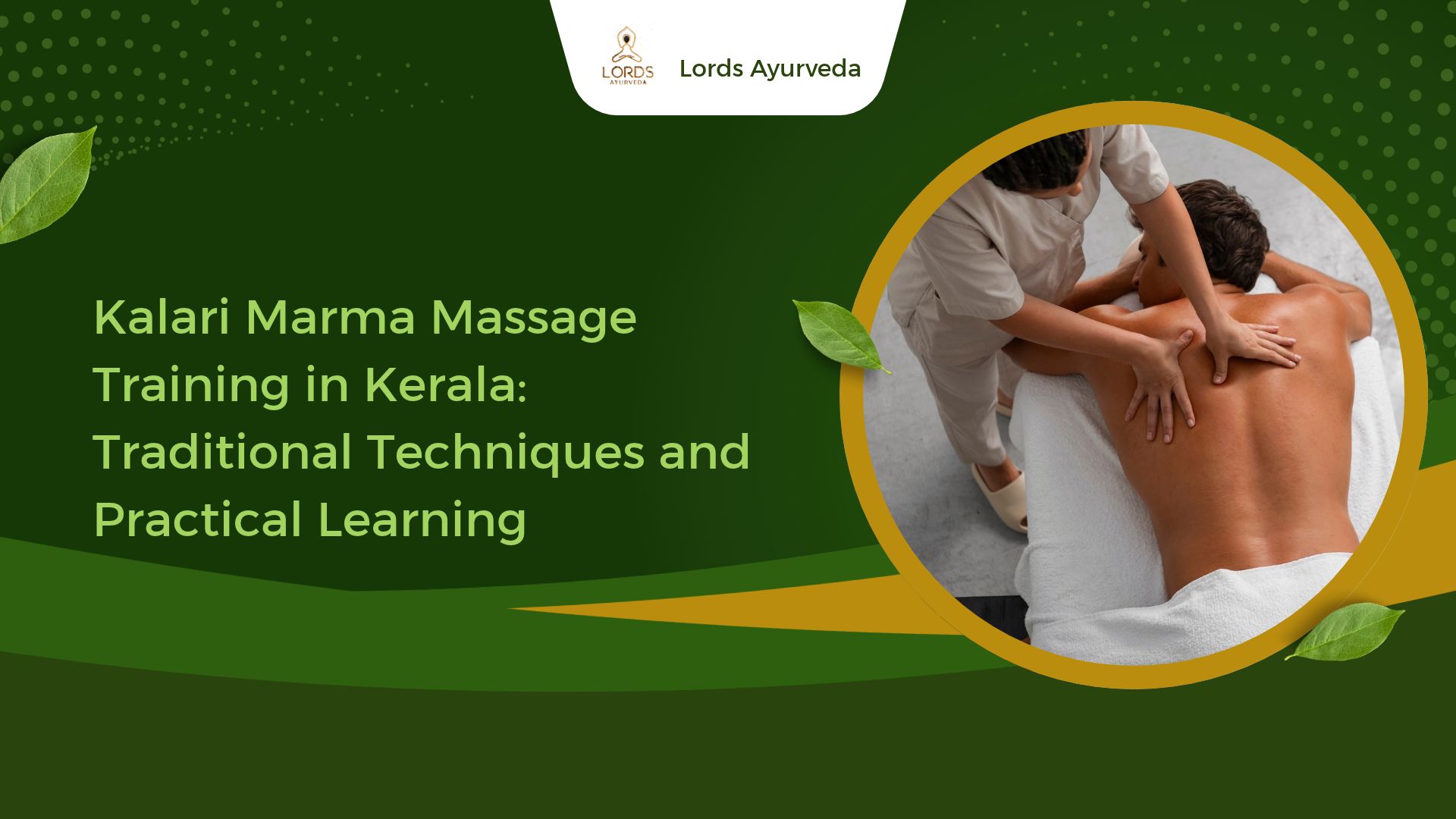
Kalari Marma Massage Training Kerala – Kerala’s traditional knowledge of body care includes several practices connected with movement, physical discipline and Ayurvedic understanding. Kalari Marma massage is one such specialised area, influenced by the traditional training methods associated with Kalaripayattu. It introduces learners to bodywork techniques, Marma awareness and the importance of controlled movements.
Learning this traditional practice requires more than observing massage demonstrations. Students need to understand how different techniques are performed, why specific movements are used and how traditional practices are taught under proper supervision.
The learning experience also introduces students to Kerala’s traditional approach to physical care, where body movement, massage techniques and practical knowledge are considered together.
Understanding Kalari Marma Massage Training Kerala
Kalari Marma Massage Training practices are connected with traditional knowledge of specific points in the human body. Learning about these points requires careful instruction because different areas have different levels of sensitivity.
Traditional massage methods may involve hand movements, foot-based techniques and the application of suitable oils. The approach can vary depending on the traditional method being taught and the individual’s training level.
Students gradually become familiar with body positioning, movement sequences and the importance of controlled application. Particular attention is given to understanding techniques rather than simply repeating movements.
Developing Practical Massage Skills
Practical learning helps students become familiar with traditional massage procedures through demonstrations and guided practice. Some important learning areas include:
- Hand-Based Techniques: Understanding traditional massage movements and their application.
- Foot-Based Massage: Learning about Chavitti Uzhichil under qualified supervision.
- Marma Awareness: Studying traditional descriptions of important body points.
- Movement Coordination: Understanding body positioning and controlled movement.
- Traditional Oil Application: Learning about the preparation and use of appropriate massage oils.
These techniques require careful practice. Marma-related procedures should never be attempted without suitable training, as incorrect pressure or application may cause harm.
Learning Through Structured Ayurveda Training
A good training experience should combine theoretical understanding with supervised practical sessions. Students benefit from learning the background of traditional techniques before progressing to their application.
Those exploring Ayurveda Certification can consider specialised training subjects alongside broader Ayurvedic studies. Before selecting a programme, learners should understand its syllabus, practical training arrangements, instructor experience and certificate details.
At Lords Ayurveda Research Center, Kannur, interested learners can enquire about available traditional massage and Kalari Marma training opportunities. Understanding the course structure and learning requirements can help students choose a programme that matches their interests.
Exploring Ayurveda Courses in Kerala
Kerala offers a distinctive learning environment for people interested in traditional Ayurvedic knowledge. Students exploring Ayurveda Courses In Kerala may come across different subjects, including Panchakarma, Ayurvedic massage, traditional wellness practices and specialised therapy training.
Each subject introduces a different aspect of Ayurveda. Learning about Kalari Marma massage can provide additional insight into the relationship between traditional bodywork and Kerala’s cultural heritage.
Conclusion
Kalari Marma massage is a specialised traditional practice that requires patience, technical understanding and responsible instruction. Its learning process introduces students to traditional massage movements, body awareness and the knowledge associated with Kerala’s Kalari heritage. Through structured education and supervised practice, learners can develop a better understanding of this distinctive area of traditional Ayurvedic bodywork.
Frequently Asked Questions
- What is Kalari Marma massage training?
Kalari Marma massage training introduces traditional Kerala bodywork techniques, Marma knowledge, massage movements and practical methods associated with Kalaripayattu.
- Who can join Kalari Marma massage training in Kerala?
Individuals interested in traditional Ayurvedic practices, massage techniques and wellness education can enquire about course eligibility and training requirements.
- What techniques are covered in Kalari Marma massage training?
Training may cover traditional hand-based massage, foot-based techniques, Marma awareness, body positioning and traditional oil application.
- Does Kalari Marma massage training include practical sessions?
Practical demonstrations and supervised training help learners understand traditional techniques, movement sequences and appropriate application methods.
- Where can I learn Kalari Marma massage in Kerala?
Interested students can contact Lords Ayurveda Research Center in Kannur to enquire about available training programmes, course duration, eligibility and practical learning opportunities.